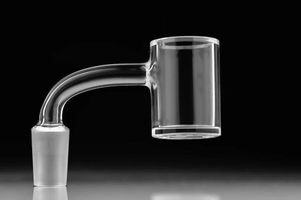
Quartz Banger Compatibility: Size, Angle and Caps
“It’s a 14 mm banger” is only the beginning. Joint gender, angle, bucket dimensions, clearance, and accessory fit all determine whether a quartz setup works together properly.


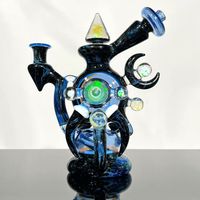
A heady piece is more than a recognizable name or a bright color palette. The right piece should match your collection, your setup, and the way you actually plan to use it.
Attribution, Function, Condition and Fit
Buying artist-made glass can be exciting, but it can also feel like learning a new language. Artist names, collaborations, color pulls, millies, sculptural details, joint sizes, and collector terminology can make a straightforward purchase feel complicated.
The simplest approach is to separate the decision into three parts: who made the piece, how well it functions, and whether it fits the way you plan to use or display it. Vape Loft sells artist-made glass, so this guide is meant to help you evaluate a piece clearly rather than chase hype.
What “heady glass” usually means
The term is used broadly, but it generally refers to original, artist-made borosilicate glass with a strong creative identity. That might include complex color work, sculptural forms, detailed linework, millies, marbles, unusual function, or a collaboration between recognized artists.
Not every expensive piece is heady, and not every heady piece needs to be enormous or covered in decoration. A small, cleanly executed piece from a respected artist may have more collector interest than a larger piece with unclear origins.
Start with artist attribution
A seller should be able to identify the artist or artists behind a piece. For collaborations, ask which artist handled each element when that information is available.
Look for a signature, engraved mark, or documented creation date.
Ask for original artist, gallery, or retailer photos when available.
Keep receipts, certificates, commission messages, and original packaging.
Compare techniques and design details with verified examples of the artist’s work.
A signature is helpful, but it is not the only proof. Some established artists do not sign every piece, while others change signatures over time. If attribution affects the price, ask for supporting evidence.
Look at function, not just appearance
A beautiful piece can still be awkward to use. When buying remotely, request a clear function video. Pay attention to how evenly water moves, whether the drain looks smooth, how much water the piece requires, whether splash reaches the mouthpiece, and how stable the base looks during normal handling.
More percolation is not automatically better. Some collectors prefer a specific pull or water level, while others prioritize a simple path that is easy to maintain. For a display-focused piece, function may be secondary, but it still helps to know whether it performs as intended.
Inspect condition carefully
Condition affects both everyday enjoyment and collector value. Request well-lit photos from several angles, including the base, joint, mouthpiece, decorative attachments, and any repaired area.
Ask about flea bites, tiny chips, scratches, and surface wear.
Look for bloom, haze, or hard-water staining.
Confirm whether attachments are loose or show stress.
Ask about every previous break or repair and who completed it.
Clarify whether the piece has been used or only displayed.
Cleanliness and condition are different questions. Residue may be removable; bloom, scratches, repairs, and structural damage generally are not. A small flaw may be acceptable for a daily-use piece, but it should be disclosed and reflected in the price.
Ask about provenance and previous ownership
Provenance is the history connecting the piece to its artist and previous owners. It matters most for rare work, significant collaborations, older pieces, or glass priced partly for its collector importance.
Ask whether the piece was purchased directly from the artist, commissioned, or originally sold through a gallery. Find out how many owners it has had and whether original accessories, cases, or documentation are included. Uncertainty is not necessarily a deal-breaker, but it should be described honestly.
Confirm fit and compatibility
A correct joint size does not guarantee a practical match. Confirm the joint size, male or female orientation, joint angle, clearance around decorative elements, height and weight of the intended attachment, and whether an adapter changes the center of gravity.
A heavy attachment can make a narrow piece top-heavy. A correct-size adapter may fit the joint but place the accessory against a marble or sculptural detail. Ask for measurements when clearance looks close.
Collector piece or daily-use piece?
For a collector-focused purchase, you may prioritize artist significance, rarity, provenance, collaboration history, color work, and display presence. For daily use, stability, cleaning access, replaceable accessories, comfortable dimensions, and straightforward function often matter more.
There is no wrong priority. Problems happen when someone buys a display-oriented sculpture and expects it to behave like a simple daily piece—or pays collector pricing for work with unclear attribution.
Verification photos and responsible seller questions
For a person-to-person transaction, request a current verification photo showing the actual piece alongside the seller’s handwritten username and date. Also ask for current photos, exact dimensions, included accessories, packing details, tracking, and a full condition statement. Pressure, evasiveness, inconsistent photos, or refusal to verify possession are reasons to slow down.
The best purchase is not necessarily the rarest or most expensive option. It is the piece whose artist, condition, function, compatibility, and price all make sense for your collection.
Explore Vape Loft’s artist-made glass, or contact our Englewood team with the piece and accessory measurements. We can help check the practical fit before you decide.
Adults 21+ only. Availability varies, and individual artist-made pieces may be one of one.